Cost Guide · Pahrump & Nye County
Septic Tank Pumping Cost in Pahrump, NV
Most Pahrump homeowners pay $350-$650 for a routine pump-out of a 1,000-gallon tank. Here's the full breakdown by tank size, what drives the price in our valley, and how often you actually need it.
- Serving Pahrump, Crystal, Amargosa Valley & Sandy Valley
- Built for Pahrump's soil, permits & pricing
- No obligation — compare before you commit
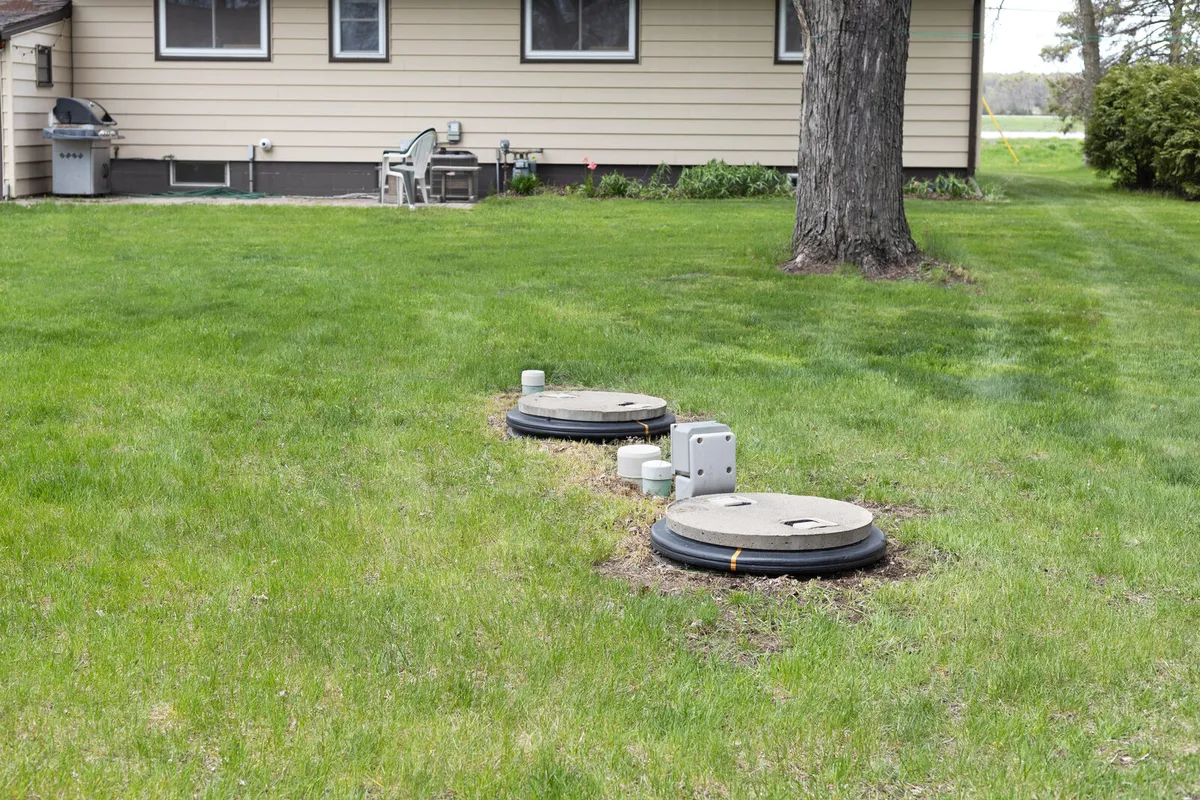
What Septic Pumping Costs in Pahrump
Nearly every home in the Pahrump Valley runs on its own septic system - there's no comprehensive municipal sewer to fall back on. That makes routine pumping the single most common septic service in Nye County, and the one where price transparency matters most.
Nationally, routine septic pumping runs $300-$800 depending on tank size and region. Pahrump pricing tends to land in the upper half of that range, mostly because of hauling economics: a pump truck that fills up here has to drive the waste to a licensed disposal facility, and that windshield time is part of every job's cost.
| Tank size | Typical household | Pahrump price range |
|---|---|---|
| 750 gallons | 1-2 people, smaller/older homes | $300-$500 |
| 1,000 gallons | Most 3-4 bedroom homes | $350-$650 |
| 1,250 gallons | Larger households | $400-$700 |
| 1,500 gallons | Large homes, high water use | $450-$800 |
Emergency, after-hours, or weekend pumping adds $150-$400 to the base price. If your system is actively backing up, start with our step-by-step guide on what to do when a septic tank backs up - a few minutes of triage can keep sewage out of the house while you arrange service, and our emergency septic pumping page covers what urgent service looks like in Pahrump.
What Actually Drives the Price
- Tank size. Bigger tanks hold more gallons; disposal fees and truck capacity scale with volume.
- Locating and uncovering the lid. If your tank lids are buried, expect an added digging charge - often the difference between the low and middle of the range. Installing risers ($200-$400) brings lids to grade so you never pay for digging again.
- Time since last pump-out. A tank that's gone 8 years carries a thick, compacted sludge blanket that takes longer to remove than one on a 3-year schedule.
- Distance and access. Properties out toward Crystal, Amargosa Valley, or Sandy Valley can see trip charges - see our outlying service-area guide for how that works.
- Urgency. Scheduled weekday service is always the cheapest way to buy this job.
How Often to Pump in the Desert
The 3-5 year rule of thumb holds in Pahrump, but household size matters more than the calendar:
| Household | Tank size | Pump every |
|---|---|---|
| 1-2 people | 750-1,000 gal | 4-5 years |
| 3-4 people | 1,000 gal | 3-4 years |
| 4-6 people | 1,250-1,500 gal | 2-3 years |
| 6+ people | 1,500+ gal | 1-2 years |
Two local wrinkles worth knowing. First, many Pahrump homes run water softeners because of hard well water - if the softener's backwash discharges into the septic system, the added salt and water volume can shorten your pumping interval. Second, seasonal occupancy cuts both ways: a winter-only home may stretch intervals, but a holiday season full of guests is exactly when marginal systems fail. Not sure where your tank is on the curve? Our guide to the signs your septic tank is full covers the early warnings, and the desert septic maintenance checklist lays out the habits that stretch time between pump-outs.
What a Good Pump-Out Includes
- Locating the tank and uncovering access lids.
- Measuring scum and sludge layers before pumping (a pro who records this can tell you your real interval).
- Pumping both compartments - not just the inlet side.
- Backflushing and rinsing to break up and remove the sludge blanket.
- A visual check of baffles, inlet/outlet tees, and tank walls while it's open.
- Noting effluent-filter condition and cleaning it if fitted.
- A written record of gallons removed and tank condition.
If a quote comes in far below the ranges above, ask which of those steps it skips. "Pump and run" service that leaves the sludge blanket or ignores a failing baffle costs more within a year or two - a failing baffle is a $250-$900 repair now versus drain-field damage later. For the bigger repair picture, see our Pahrump septic repair guide.
Pumping vs. Cleaning vs. Jetting - Don't Pay for the Wrong One
Three services get quoted interchangeably on the phone, and they are not the same job:
- Pumping - removing liquids and solids from the tank. The routine service this page prices, and what "my tank is full" actually needs.
- Tank cleaning - pumping plus thorough backflushing and rinsing to strip the compacted sludge off the tank floor and walls. Good providers effectively include this in a proper pump-out; be alert to anyone quoting a cheap "pump" and then upselling "cleaning" on-site as a surprise.
- Hydro-jetting - high-pressure water clearing of lines, not the tank. It's a legitimate fix for a clogged inlet line or sluggish laterals, but it's a separate service at a separate price, and it's not a substitute for pumping. If a provider recommends jetting, ask what specifically is clogged and how they know.
The clean way to buy: ask "what's included in your standard pump-out, and what would cost extra?" before the truck rolls. The answer should cover both compartments, backflushing, lid access digging, and dump fees.
How to Prepare for the Pump Truck (and Save Money Doing It)
- Know where your tank is. If you have the as-built drawing from your system's permit file, have it out (our records guide shows how to get it). Paying a crew to hunt for a tank with a probe rod is the most avoidable charge in this business.
- Clear truck access. Pump trucks are heavy and hoses have practical limits - a truck that can park within reach of the lids finishes faster. Move vehicles, unlock gates, contain dogs.
- Expose the lids if you comfortably can. Many providers charge for digging; ten minutes with a shovel the evening before (lids are typically 6-18 inches down on older systems without risers) is money in your pocket. If lids are deep or you're unsure, leave it - and ask about risers.
- Ask for the condition report. Gallons removed, sludge thickness, baffle condition, water flowing back from the field or not. Thirty seconds of the operator's observations is free diagnostic data - and "water ran back in from the outlet" is an early drain-field warning worth knowing about.
- Write down the date. Receipt in the system file, next pump-out on the calendar. Done.
Choosing Who Does the Work
Pahrump has a small pool of genuinely local septic companies plus a rotating cast of out-of-area operators marketing into the valley. Our guide to choosing a septic company in Pahrump profiles the established local providers and gives you a vetting checklist. Or skip the research: tell us what you need below and we'll connect you with an available independent local provider - free, with no obligation.
Get a Free Pumping Quote
Tell us your tank size (if you know it) and we'll match you with an available local provider.
Frequently Asked Questions
How much does it cost to pump a septic tank in Pahrump?
Most Pahrump homeowners pay $350-$650 for a routine pump-out of a standard 1,000-gallon tank. Smaller 750-gallon tanks run $300-$500, while larger 1,250-1,500-gallon tanks range from $400-$800. Emergency or after-hours service adds $150-$400 on top of the base price.
Why does septic pumping cost more in Pahrump than the national average?
Pump trucks that service Pahrump often haul waste long distances to licensed disposal facilities, and fuel plus drive time gets built into the price. That tends to push Pahrump pricing toward the upper half of the national $300-$800 range rather than the bottom.
How often should I pump my septic tank in Pahrump?
For most households, every 3-5 years is the standard guideline. A large family in a smaller tank may need pumping every 2-3 years, while a couple in a 1,500-gallon tank can often go 5 years. Garbage disposals, water softeners that discharge to the tank, and frequent guests all shorten the interval.
Does pumping include cleaning the tank?
A standard pump-out removes liquids and solids from the tank. Most reputable providers also backflush and rinse to remove the sludge layer, and will check baffles and the inlet/outlet while the tank is open. Confirm what's included when you book - a bare-minimum pump that leaves the sludge blanket behind is not a good deal at any price.
Can I wait until my drains slow down to pump the tank?
Waiting for symptoms is the expensive strategy. By the time drains slow or sewage backs up, solids may already be flowing into your drain field - and drain-field replacement in this area runs $3,000-$15,000, versus $350-$650 for routine pumping. Pumping on schedule is the cheapest insurance a septic owner can buy.